Contents
Sugary Sweet Emergency Recipe Substitutions or Ingredient Equivalents for Sugars and Molasses
Today, Mom helps cooks in the kitchen with recipe tips for granulated, brown, powdered sugars, and molasses. It’s a treat baking sweets, but running out of a crucial recipe ingredient can really gum up the works. Knowing an ingredient “equivalent” or substitution can save the day. Many cake and cookie recipes can be adapted by using modern sweeteners if you don’t have ingredients called for in vintage cookbooks or grandma’s desert recipe.
Granulated Sugars
Most sugar is made from sugar cane or sugar beets. The plants are juiced, the liquid is boiled 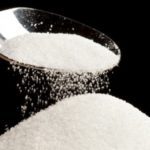 several times to separate out the molasses and the remaining clear liquid is crystallized into the familiar white granules on our tables. If you don’t have 1 cup granulated sugar use 1 cup packed brown sugar OR instead of 1 cup granulated sugar use 2 cups powdered sugar.
You can also substitute sweet syrups for granulated sugars, but you’ll need to remove some of the liquid in your recipe to maintain the correct moisture level. If you are baking it helps to add a leavening agent like baking soda. If you don’t have the soda and you are not baking, then you can probably leave it out and still be ok. But this may effect texture and cooking times, so keep a closer eye on your creation.
If you don’t have 1 cup granulated sugar use 1 cup honey + 1/4 tsp soda and reduce the liquid in the recipe by 1/4 cup. Honey is sweeter than granulated sugar.
Or, instead of 1 cup granulated sugar use 1 1/2 cups molasses plus 1/4 tsp baking soda and reduce the liquid in the recipe by 1/4 cup. 1 pound (package) granulated sugar = about 2 1/4 cups granulated sugar.
Powdered Sugar
Superfine or powdered sugar is granulated sugar that has been spun into a powder. Used for a slightly smoother texture especially in frostings and fluffy meringues. When measuring you’ll need slightly more powdered to make up for its fine grain.
If you don’t have 2 cups powdered sugar use 1 cup granulated sugar.
1 pound (package) of powdered sugar = about 3 1/2 cups powdered sugar, unsifted (not packed).
Confectioner’s Sugar
Confectioners sugar has been processed past the powdered sugar phase, into an even finer powder. Today the terms are used interchangeably, so check your packaging.
Brown Sugars, Golden or Dark
Brown sugar or sugar in the raw, has slightly more brown syrup, or molasses than white granulated sugar and is slightly less sweet. As a result, brown sugar has a smokier flavor and darker color.
Golden brown sugar has less molasses than dark brown sugar. The two can be used interchangeably, but note the darker sugar will have a richer flavor and color and is generally better if you’re cooking pork.
If you don’t have brown sugar use granulated sugar instead using the exact same measurements. You can also make brown sugar by combining 1 cup sugar with 1/2 cup molasses, but this may throw off the liquid in your recipe, so be careful using this substitution when baking cakes.
Brown sugar will remain soft if it is kept in an airtight container. To soften brown sugar place it in an ovenproof container and warm at 250 degrees until soft, or microwave on high for 30 seconds at a time until soft. Use it immediately as it will be harder than before when it cools!
A 1 pound package of brown sugar equals about 2 1/4 cup firmly packed brown sugar.
Baking With Rich, Sweet Molasses
Molasses has a dark, sweet, smoky taste. It is created during the sugar refining process. Molasses is slightly less sweet than granulated sugar. Until sugar prices fell in the 1930’s molasses was the primary sweetener in American kitchens. Sulphur dioxide is sometimes used to make molasses sweet. The term ‘unsulphured molasses’ just means sulphur was not used in the creation of your molasses and it should be the lightest and sweetest type.
Measuring molasses is easier (and more accurate) if you grease the measuring cup first with a little cooking spray or butter. One 12 fluid ounce jar of molasses equals 1 1/2 cups. One cup equals 8 fluid ounces.
Another molasses trick is to measure the molasses in the same measuring cup as your liquid. Say your recipe uses 3/4 liquid and 1/4 cup of molasses. First, pour the liquid up to the 3/4 cup line. Then add your molasses until it measures 1 cup. It will be accurate and shouldn’t stick to the measuring cup.
If you still have room in the measuring cup, add any other wet in ingredients and mix everything together before adding it to the dry ingredients. You’ll get a better mixed batter.
If you are making a vintage recipe I heartily recommend you spring for a jar of molasses. Molasses is the secret ingredient in many cookies, cakes, ham glazes and BBQ sauces. Granulated sugars will not taste the same. If you have a jar left over, you can use molasses in baked beans, ham, oatmeal, ice cream or added to syrup and butter on pancakes.
Molasses Health Tip
One tablespoon of molasses provides 8% of your daily recommended iron and 4% of your calcium!
Molasses Equivalents
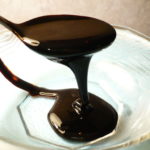
One cup of molasses equals 1 cup honey. Bear in mind honey is sweeter than molasses and will change the flavor slightly.
OR
instead of 1 cup of molasses try 3/4 cup granulated sugar (brown is preferable) plus 1/4 cup water. The extra water (or other liquid) is called for to make up for the moisture in molasses.
It is important to replace liquids if you’re baking cakes or breads.
Blackstrap molasses is the thickest, darkest and least sweet type of molasses and isn’t recommended for baking.
More Sugar Baking Tips:
Baking with sugar relies on a bit more science than your average frosting recipe. Not only do the ingredients add flavor, they may also serve a specific function like making your cake rise, or binding ingredients together.
For best results when baking, measure all your ingredients accurately; like leveling off your measuring cup with the edge of a knife and setting the cup on the counter when measuring liquids.
When you resort to a substitution just be aware that your texture or flavor may be slightly different.